
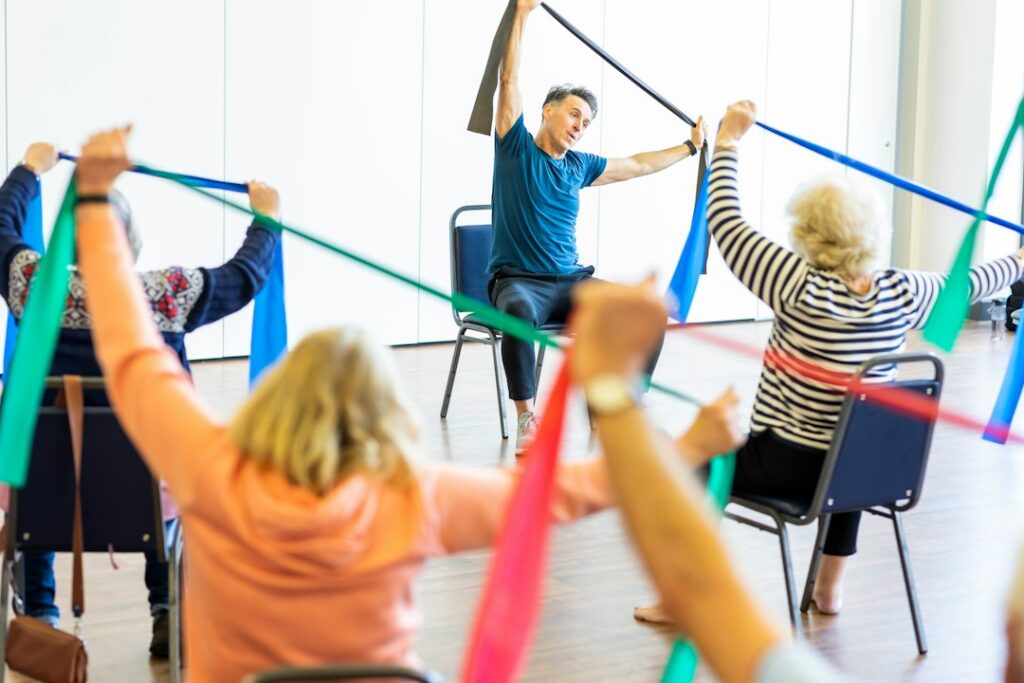
Assisted living can encourage an active lifestyle by making movement part of ordinary daily routines rather than treating exercise as a separate task. Residents may have more opportunities to walk, participate in group activities, spend time outdoors, and maintain useful physical skills in ways that match their abilities and interests.
What does an active lifestyle mean in assisted living?
An active lifestyle is not limited to formal workouts. For older adults, it may include walking to meals, standing safely from a chair, gardening, joining a discussion group, taking part in music activities, or completing personal tasks with as much independence as possible.
The goal is usually consistent movement, social connection, and participation. Activities should be adapted to each resident’s health, balance, energy level, and preferences. Someone who cannot walk long distances may still benefit from seated exercises, short hallway walks, gentle stretching, or recreational activities that encourage reaching and changing position.
A supportive setting recognizes that activity looks different for every person. The most useful routine is one that feels manageable enough to continue.
How does assisted living make movement easier to include?
Assisted living communities often place common areas, dining spaces, activity rooms, outdoor spaces, and residential areas within practical walking distances. This layout can create natural opportunities for movement throughout the day.
Instead of remaining in one room for long periods, residents may walk to:
- Meals and snacks
- Social gatherings
- Creative or educational activities
- Outdoor seating areas
- Personal appointments or scheduled programs
- Visits with friends and family
These short trips may seem minor, but repeated movement supports stamina, lower-body strength, balance, and confidence. Regular activity also helps residents remain familiar with their surroundings, which can make everyday routines feel more comfortable.
A well-designed setting may include handrails, level walking surfaces, adequate lighting, rest areas, and clear paths. These features do not eliminate fall risk, but they can make movement more practical for people who need additional support.
What types of activities help residents stay active?
A balanced activity schedule usually includes several forms of movement rather than relying on one exercise class. Common examples include:
Walking activities: Short indoor walks, outdoor strolls, or supervised walking groups can support endurance and confidence.
Strength-building activities: Light resistance exercises, sit-to-stand practice, and movements using the body’s own weight may help maintain the strength needed for dressing, transferring, and carrying light objects.
Flexibility and balance activities: Gentle stretching, chair yoga, tai chi-inspired movements, and balance exercises may support range of motion and body awareness.
Recreational activities: Dancing, gardening, bowling-style games, crafts, and group games can involve reaching, grasping, bending, or changing position without feeling like traditional exercise.
Mind-body activities: Breathing exercises, relaxation practices, and gentle movement can support body awareness and reduce the fear some residents feel about being active.
Activities should be offered at different levels. A resident may participate while seated, use an assistive device, take frequent breaks, or complete only part of a session.
Can social activities help older adults remain physically active?
Yes. Social connection often gives residents a reason to leave their rooms and participate in the community. Group activities may also make movement more enjoyable and less intimidating.
A resident may be more willing to walk to a game, attend a music session, or join a shared meal than to exercise alone. Conversation and companionship can help reduce the sense that activity is a chore.
Social programs may also support emotional well-being. Feelings of loneliness, anxiety, or low motivation can make people less active. Regular opportunities to see familiar faces can encourage participation and create a predictable rhythm to the day.
The social benefit is especially relevant for residents whose previous routines changed after retirement, illness, loss of a spouse, or a move away from a longtime home.
How do seasonal conditions affect activity in Jersey Shore?
Seasonal weather can influence how and where older adults move. Winter conditions may bring ice, snow, freezing temperatures, and shorter daylight hours. These conditions can make outdoor walking more difficult and increase the need for safe indoor alternatives.
During colder months, residents may benefit from indoor walking routes, seated exercise, stretching sessions, hallway activities, and social programs that encourage people to move between rooms. Good lighting and clear walkways are particularly useful when outdoor surfaces are slippery or visibility is limited.
Warmer months may provide more opportunities for outdoor walks, gardening, patio activities, and time in shaded areas. Heat, humidity, and sudden weather changes still require attention. Residents may need access to water, rest periods, comfortable clothing, and cooler indoor spaces.
Activity plans should change with the season instead of assuming that the same routine works year-round.
What if a resident has limited mobility or health concerns?
Limited mobility does not mean a person must stop being active. It means activities may need to be adjusted and monitored more carefully.

A resident who uses a walker or wheelchair may participate in upper-body exercises, seated stretching, gardening at a raised bed, music-based movement, or short trips to shared areas. Someone recovering from an illness may need a gradual routine with more rest.
Health conditions such as arthritis, osteoporosis, heart disease, balance disorders, or memory loss can affect the safest types of movement. Activity should follow the resident’s care plan and any instructions from qualified healthcare personnel. Pain, dizziness, unusual shortness of breath, chest discomfort, or sudden weakness are warning signs that activity should stop and be evaluated.
The purpose is not to compare one resident with another. Progress may mean standing a little longer, walking a familiar route, participating in a group, or completing a daily task with less assistance.
How can families support an active routine?
Families can encourage activity by focusing on participation rather than performance. Positive support may include asking about favorite activities, joining a walk during a visit, bringing comfortable clothing and properly fitted footwear, or celebrating regular involvement in daily routines.
Useful questions include:
- Which activities does the resident enjoy most?
- What time of day does the resident have the most energy?
- Are there activities that cause pain, fatigue, or frustration?
- Does the resident prefer group activities or one-on-one support?
- What changes would make walking or participation feel safer?
Family members can also share information about past hobbies. Someone who never enjoyed formal exercise may still enjoy woodworking, cooking, dancing, fishing, puzzles, or caring for plants. Familiar interests often provide a more natural path to movement than a generic fitness routine.
What should residents look for in an activity program?
A helpful program offers variety, flexibility, and reasonable safety measures. Residents and families may look for:
- Activities offered at different ability levels
- Indoor options during unsafe weather
- Opportunities for both movement and social connection
- Time for rest and hydration
- Clear communication about changes in health or mobility
- Respect for personal choice and cultural preferences
- Staff awareness of assistive devices and individual limitations
An active lifestyle in assisted living is not defined by athletic ability. It is supported by a setting that makes everyday movement accessible, meaningful, and adaptable. For local residents, the most effective routine may combine short walks, familiar social activities, seasonal outdoor time, and practical support that helps preserve independence.
